
2 min read
What the most famous brand mascots of all time have in common
Some mascots become so embedded in culture that people forget they were invented by a marketing department. Tony the Tiger has been on cereal boxes since 1952. The Michelin Man has been selling tires since 1898. Ronald McDonald is more recognizable to American children than some historical presidents.
These aren’t accidents. The most famous brand mascots share a set of characteristics that made them last.
They have a clear visual silhouette
Every iconic mascot is instantly recognizable in silhouette. Mr. Peanut’s top hat and monocle. The Pillsbury Doughboy’s round belly. The Energizer Bunny’s sunglasses and drum. When you can identify a character from its outline alone, the design is doing its job at the most fundamental level.
This matters because mascots appear at every scale. They need to work on a billboard, on an app icon, on a sticker. If the design relies on detail to be readable, it will fail at small sizes.
They have a defined personality
The GEICO Gecko isn’t just a gecko. He’s a slightly exasperated British gecko who can’t believe he keeps getting phone calls about car insurance. That specificity is what makes him memorable. He’s not “friendly and approachable.” He’s a very particular character with a very particular worldview.
The mascots that fade away are the ones with no personality beyond “happy” and “enthusiastic.” You need a point of view. You need quirks. You need something that feels like a real character, not a brand attribute in a costume.
They show up consistently
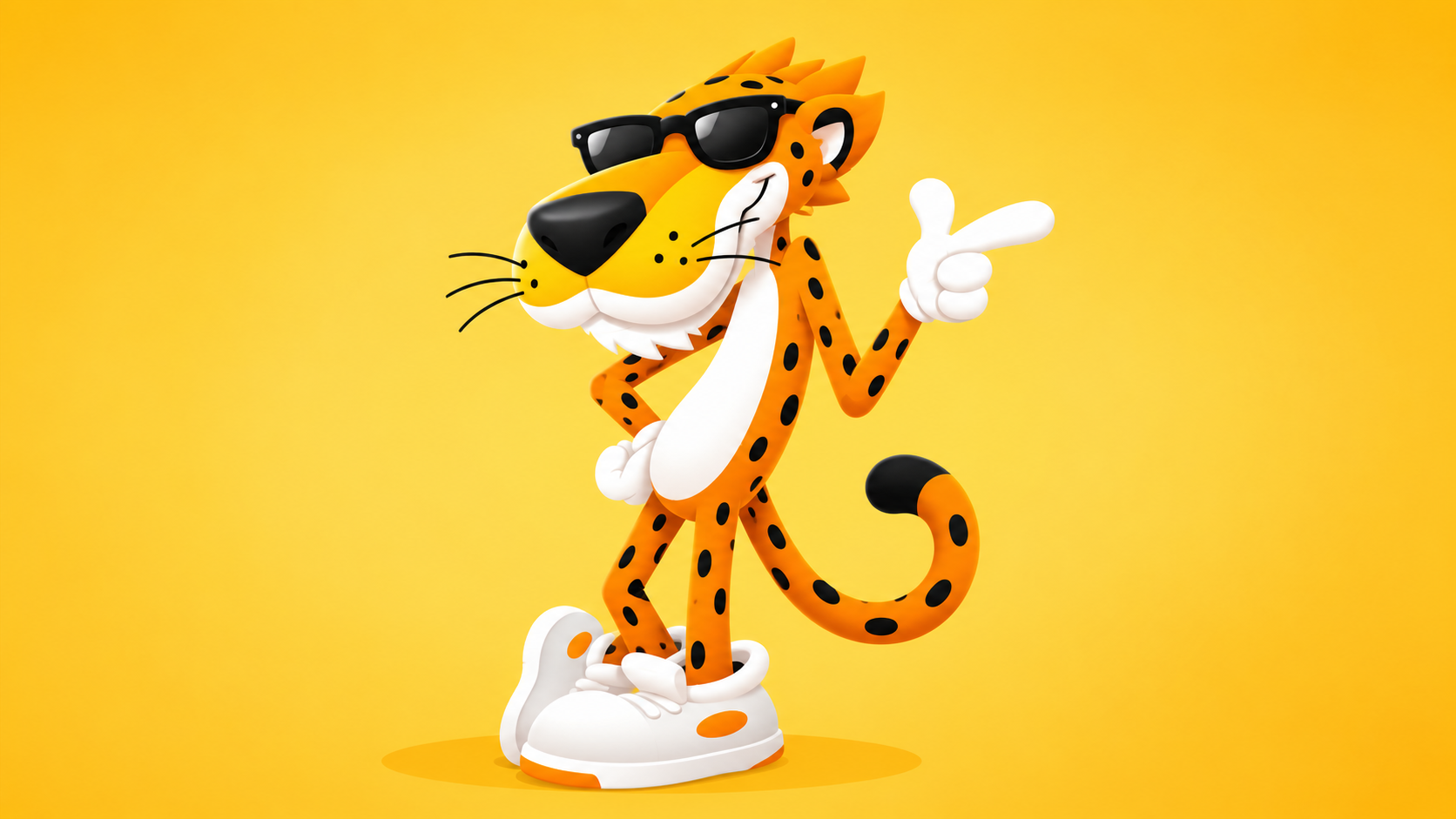
Chester Cheetah has been selling Cheetos for decades. He evolves visually, but he never disappears. Flo from Progressive has been in continuous use since 2008. The Aflac Duck has been around since 2000. These companies committed to their characters and kept investing.
The biggest mistake companies make with mascots is treating them as campaigns instead of assets. A mascot isn’t a seasonal promotion. It’s a long-term investment in recognition and affection.
They evolve without losing their identity
Colonel Sanders has been redesigned dozens of times. The M&M’s characters went from simple animations to CGI to having distinct personalities and social media presences. The Kool-Aid Man started as a simple pitcher face and eventually became a cultural reference point.
Evolution is essential. A mascot that looks exactly the same as it did in 1985 feels dated. But the core identity, the silhouette, the personality, the relationship with the brand, stays constant.
The lesson for new brands
You don’t need a hundred-year head start. You need a clear design, a real personality, and the commitment to keep showing up. The famous mascots weren’t famous on day one. They became famous because their companies treated them as assets worth investing in, year after year, touchpoint after touchpoint.