
3 min read
How to create a mascot people actually care about
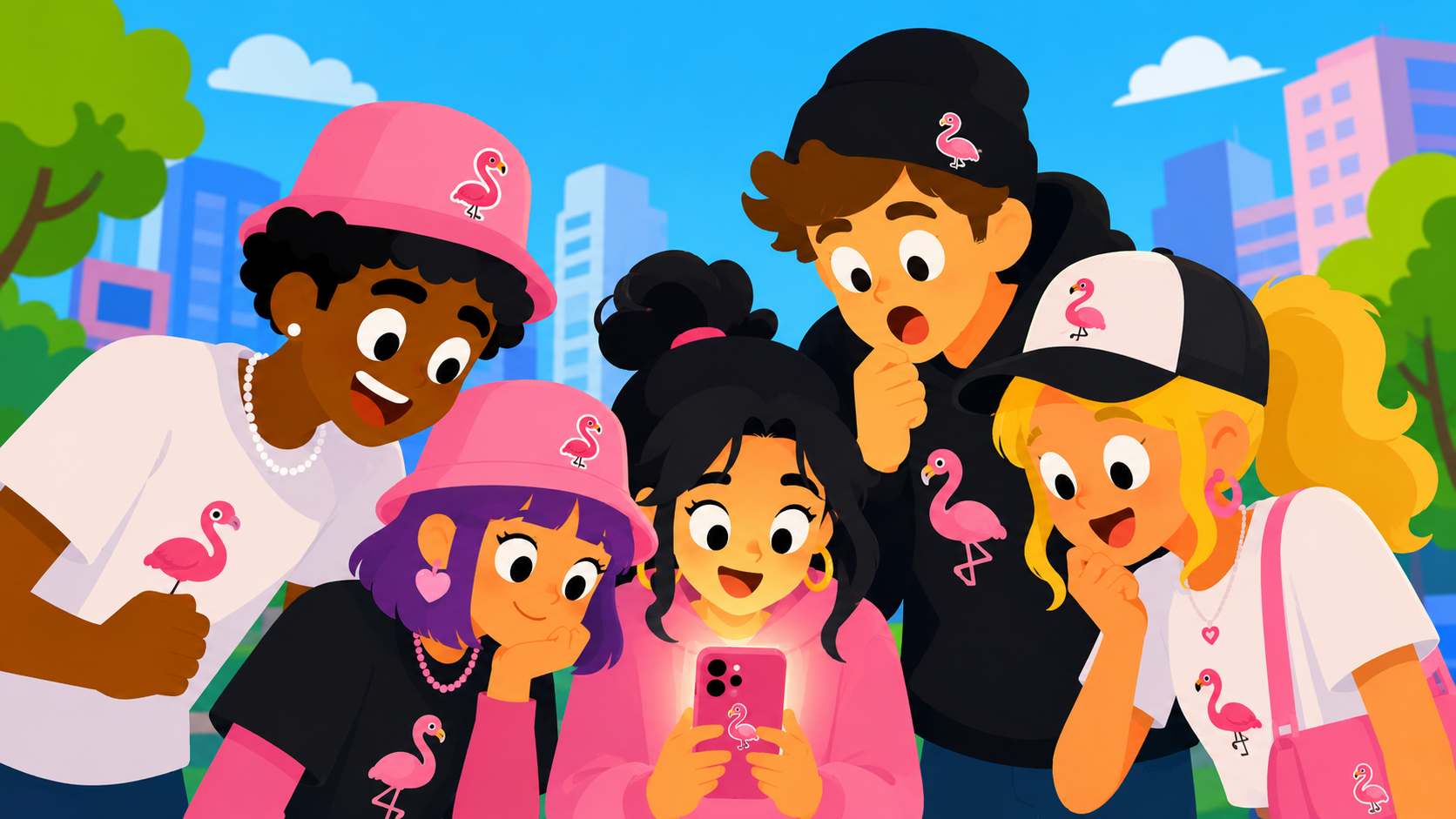
Creating a brand mascot is not the same as hiring an illustrator to draw a cute animal. The illustration is one step in a process that starts with strategy and ends with a system. Here’s how that process works, from the first conversation to launch.
Step 1: Define the role
Before you sketch anything, you need to answer one question: what job will this mascot do? Some mascots are product guides. Some are brand ambassadors. Some exist primarily as social media personalities. Some live inside the product as UI companions.
The role determines everything. A product guide mascot needs to be helpful and clear. A social media mascot needs to be expressive and opinionated. A UI companion needs to be small, simple, and unobtrusive. Start with the job, not the animal.
Step 2: Research your audience
Who will interact with this character, and in what context? A mascot for a children’s education app has different requirements than a mascot for an enterprise monitoring platform. Age, cultural context, and platform all matter.
This is also where you study the competitive landscape. What mascots already exist in your space? What visual language do they use? You want your character to feel distinct, not derivative.
Step 3: Write the personality before you draw the face
The most expensive mistake in mascot work is sketching first. Once a character has a face, every conversation about personality gets pulled toward what’s already on the page. The drawing wins, even when the drawing is wrong.
Write the personality bible first. We’re talking real personality. Not “friendly and approachable.” That tells you nothing. We mean: what is this character afraid of, what do they secretly think they’re better at than they are, what’s their worst trait that the brand should still love them for. The answer to those questions is what gives a mascot interiority. It’s also what makes the character defensible in a meeting two years from now when a stakeholder wants to put them in a Santa hat for the holidays.
A good personality bible is the document you wave around when someone wants to ruin your mascot. Without it, you have nothing to point to.
Step 4: Explore visual directions
Now you sketch. Start broad. Explore multiple character types, not just variations on one idea. If the brief says “friendly animal,” don’t draw ten dogs. Draw a dog, an owl, a hedgehog, a blob creature, and something completely unexpected.
The goal at this stage is range. You’re looking for the concept that best embodies the personality you’ve already defined. The best designs often come from unexpected directions.
Step 5: Refine and systematize
Once you’ve chosen a direction, refine it into a system. This means creating the character at multiple scales, in multiple poses, with multiple expressions. It means defining the color palette, the line weight, the rendering style. It means building a library of assets that can be used across every touchpoint.
A mascot is not a single illustration. It’s a design system.
Step 6: Roll out strategically
Don’t launch your mascot everywhere at once. Start with the touchpoints where it will have the most impact. Maybe that’s the app onboarding flow. Maybe it’s social media. Maybe it’s the 404 page.
Build familiarity gradually. Let people discover the character. Then expand its presence over time as the relationship develops.
The timeline (and what most clients try to skip)
A well-run mascot project takes 10 to 12 weeks. The first three are personality and research. The next four are visual exploration and refinement. The last three are systematization, which is the boring part where the character becomes a usable design system instead of a single beautiful illustration.
Almost every client wants to compress the first three weeks. The brief is usually “we know our brand, can we just get to the drawing.” We push back on this, and we push back hard, because the projects where we let the client win that argument are the projects we’re least proud of. The personality work isn’t a deliverable. It’s the thing the deliverable depends on. Skip it and you have a nice illustration. Don’t and you have a character.