4 min read
Most mascots are bad and it's not the designer's fault
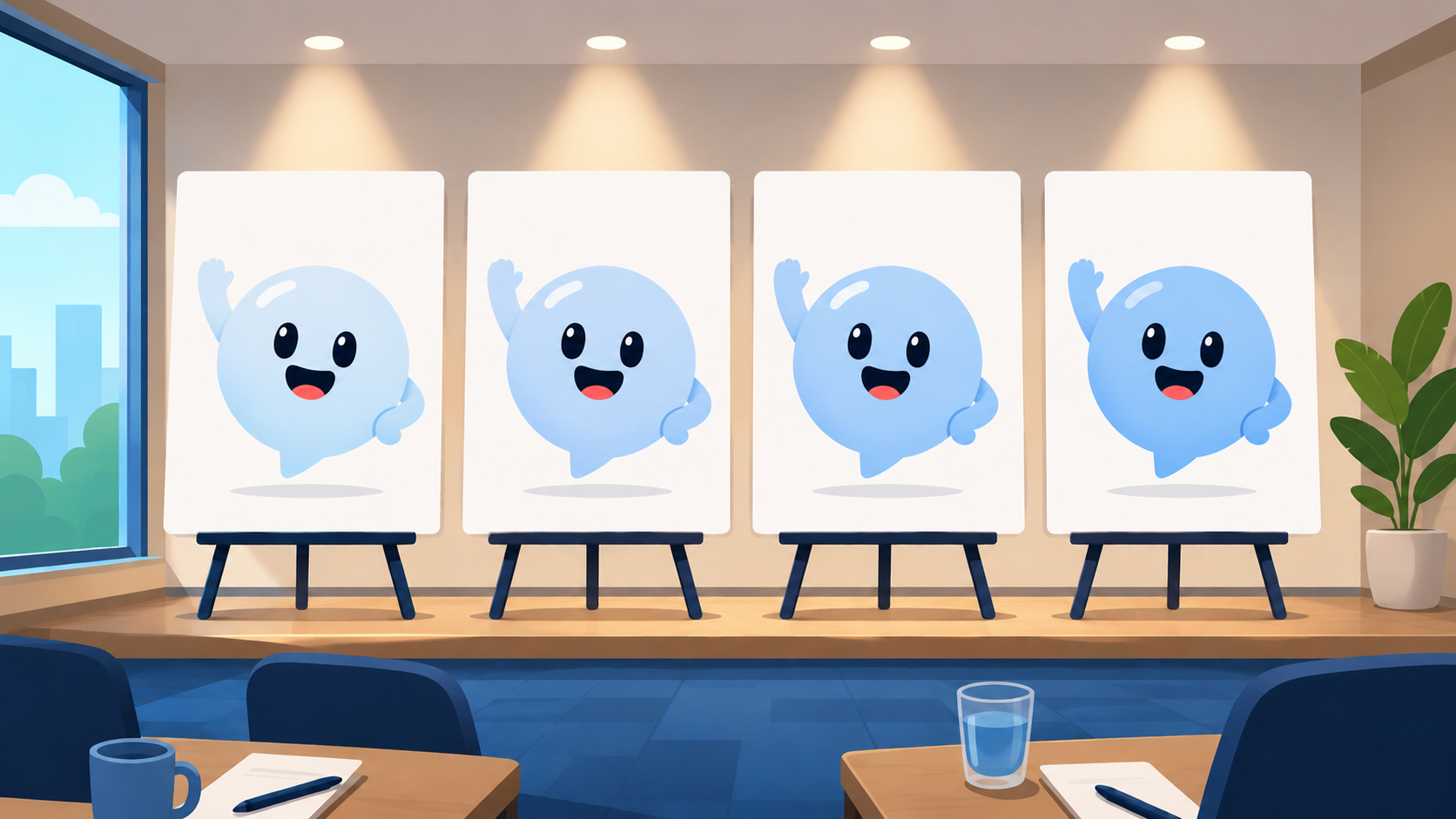
Walk through any agency portfolio or design awards shortlist. Most of the work is interchangeable. Bean-shaped bodies, sticker eyes, the same handful of poses recycled across categories the characters have no real relationship to. The mascot industry has a quality problem and everyone inside it knows.
The reflex is to blame the designer. It’s a bad reflex. Most of the designers producing this work can illustrate. The illustration is usually fine. The character is what’s failing, and the character gets decided before the illustrator is hired.
The failure is structural. It happens in four places before anyone draws.
The brief is broken
The brief comes from someone who has been told to “humanize the brand” by someone above them who said the same thing to their boss. By the time the brief reaches the agency, it’s been distilled into a small set of asks that all sound reasonable. Friendly and approachable. Works across channels.
None of those words mean anything specific enough to design against. “Friendly” is the default brief in every category. “Approachable” is the same word as “friendly.” That isn’t a brief. A brief gives the designer constraints to work against. A wish list gives them nothing.
The good briefs name a job. Maybe the character is there to soften a specific in-product moment. Maybe it’s there to carry the part of brand voice the wordmark can’t carry on its own. That’s a brief. You can draw against it.
The buyer has never done this before
Most clients commissioning a mascot are doing it for the first time. They have no internal reference for what a strong sketch looks like at week three. They don’t know which kickoff questions predict whether the project will succeed. The agency presents three concepts, the client picks the safest, and “safest” wins because it’s the only criterion the client can defend in the room.
This is the same dynamic that produces mediocre office buildings. A committee evaluating four architectural firms picks the firm whose presentation looks the most like the buildings they’ve already seen, because that’s the version of “competent” the committee can recognize. Mascot procurement reproduces the same logic. The buyer recognizes a pattern from previous portfolios, and the next round of commissions hardens it into the new baseline.
Procurement selects for the wrong thing
Above a certain company size, agency selection gets handed to procurement. Procurement is graded on cost and timeline. It is not graded on whether the resulting mascot is any good. Two years from now, when the mascot has quietly been retired and a new VP is commissioning a different one, the procurement person who picked the original agency will be evaluating a vendor in a completely different category.
This isn’t a moral problem. Procurement is doing the job the company defined for it. The job has nothing to do with the criteria that make a mascot work. The agencies that survive the procurement gate are the ones who are good at procurement. The work itself is a secondary filter, applied after the cost-and-timeline filter has already done its damage.
The agency learns what gets approved
Inside the agency, the work adapts to the briefs the agency gets paid for. After a few hundred client meetings, you learn the shape of what gets approved. The same mid-range warmth, the same absence of risk. Polarizing concepts get rejected, because the client can’t carry a polarizing concept past their internal stakeholders.
Over time, the agency stops generating the polarizing options at all. Strange concepts extend timelines and damage relationships. Better to ship the reliable thing and move on. The agency is responding to an incentive structure the buyer created. The lazy explanation, that designers are getting worse, doesn’t survive contact with the work. The illustration is good. The brief is what’s bad.
What the 20% looks like
A small number of mascots are good in a way that’s obvious to everyone, including people outside the design world. What those characters share is structural. Someone senior enough to bypass the procurement committee was personally involved, and somewhere in the process, one person made a call that was hard to defend in the moment but obvious in retrospect.
Duo wasn’t commissioned by procurement. Neither was Mr. Peanut. The Michelin Man came out of a small marketing department where the decision could be made by one person in a single meeting. Scale and committee structure are the proximate enemies of mascot quality.
What to do if you’re buying
The fix starts before the agency is hired. Refuse to let the brief get distilled into a wish list before it reaches them. Bring the agency in early enough to help write the real one. When concepts come back, the worst thing you can do is evaluate four options and pick the safest. Ask the agency which direction they think is right and make them defend it. The work that comes back will be sharper, and the framework you used to commission it will tell you whether the result is working.
What to do if you’re selling
If you’re an agency, the structural problems are mostly outside your control. What’s inside your control: refuse the briefs that won’t produce good work, and charge enough that walking away occasionally doesn’t threaten the studio. Both of those depend on a kind of nerve most agencies don’t have. The ones who develop it are the ones whose work people remember a decade later.
We work with clients who want one direction defended, not four safe options to choose from. If you’re commissioning a character and the brief still feels generic, we’d love to talk.