
2 min read
Most mascots don't survive past year two
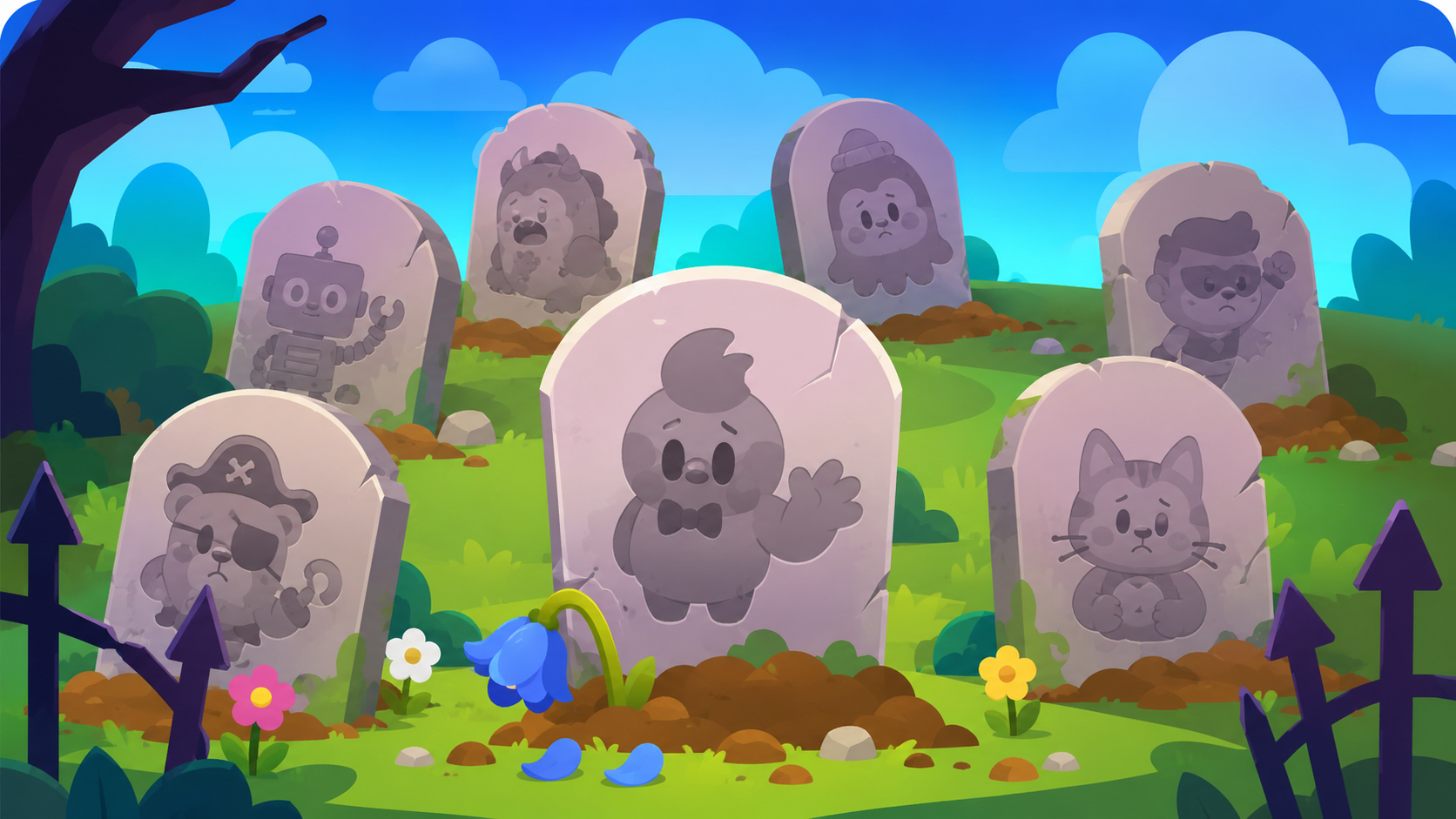
Most mascots get retired faster than the people who commissioned them. Not because they failed exactly, but because nobody planned for what happens after launch. We’ve watched it happen to mascots from companies that should have known better. The character gets built for a product launch, runs for eighteen months, and then quietly disappears when a new VP wants to make their mark. Year two is when most mascots die. It’s not a design failure. It’s an organizational one.
For every Michelin Man that’s been around for 125 years, there are hundreds of mascots that launched, ran for a campaign cycle, and were quietly retired. The attrition rate for brand characters is brutal. Most don’t make it past five years.
The ones that last share a few traits that have nothing to do with how well they were drawn.
They have ownership, not just design
The number one reason mascots die is organizational neglect. A team creates a character for a specific campaign or product launch. The campaign ends. Nobody is responsible for the character anymore. It drifts into the brand guidelines graveyard, technically available but functionally abandoned.
The mascots that last have someone who owns them. At Duolingo, the social team is empowered to evolve Duo’s personality. At Datadog, the brand team actively manages Bits across every touchpoint. Ownership means someone is thinking about the character’s next appearance, not just its last one.
They live in the product, not just the marketing
Marketing campaigns end. Products get used daily. If your mascot only exists in ads, it exists at the mercy of the next creative brief. If it lives inside the product, it becomes part of the user experience.
Discord’s Wumpus appears in loading screens, empty states, and error pages. Asana’s creatures fly across the screen when you complete a task. These are small touches, but they create daily familiarity that no campaign can match.
They have room to evolve
The mascots that last are designed with flexibility built in. They can wear costumes. They can express different emotions. They can appear in different contexts without looking forced.
This means the original design needs to be simple enough to be adaptable. Overly detailed characters are hard to pose, hard to animate, and hard to evolve. The best long-lived mascots have clean, simple base designs that serve as a foundation for infinite variation.
They become cultural objects
At some point, the most successful mascots transcend their brand function. People put them on t-shirts they actually want to wear. They make fan art. They reference them in conversation. The character becomes a cultural artifact that happens to be associated with a brand.
You can’t engineer this. But you can create the conditions for it by giving the mascot a genuine personality, putting it in places where people encounter it naturally, and letting the community build their own relationship with it.
The practical test
If you want to know whether your mascot will last, ask yourself three questions. Does someone in the organization own it? Does it appear in the product, not just the marketing? And can it be easily adapted to new contexts without a redesign?
If the answer to all three is yes, you have a character with staying power. If not, you have a campaign asset with an expiration date.