8 min read
One hedgehog is quietly outperforming most brand campaigns
Why mascots still matter
In a world drowning in abstract logos and geometric wordmarks, the brands that stick are the ones with a face. A personality. Something you can put on a hoodie that people actually want to wear.
We study mascots for a living. We build them, evolve them, and figure out how to make them earn their keep. So when we come across one that’s firing on all cylinders, we sit up and take notice.
Today, we want to talk about Max.
Meet Max: PostHog’s hedgehog
PostHog is an open-source product analytics platform built for engineers. Their product is deeply technical. Session replays, feature flags, experiments, data warehouses. The kind of thing that could easily hide behind a sterile, forgettable brand.
Instead, they went and built one of the most recognizable mascot systems in B2B tech.
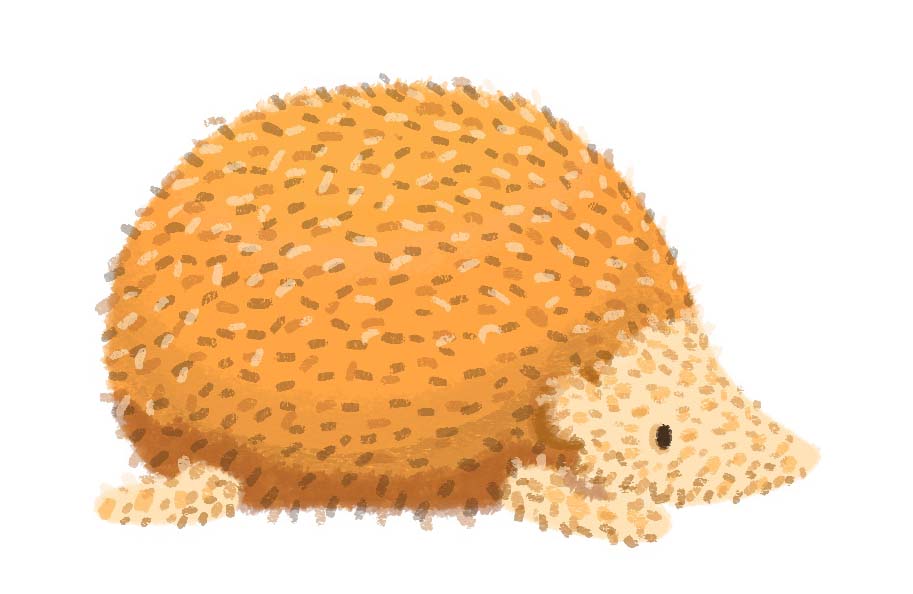
Max is a hedgehog. Beige body, brown spines, stubby feet, and an expression that lives or dies by his eyebrows. He’s drawn with a strong black monoline of consistent thickness. He always faces left, right, or straight on. Never from behind or in profile because, as PostHog’s own brand guidelines put it, “he’s self-conscious.”
That one little detail tells you everything about why this mascot works. He has rules. He has personality. He has lore.
The origin story
Max didn’t show up fully formed. PostHog’s original logo was affectionately known as the “hairy thumb,” a rough hedgehog sketch drawn by co-founder James Hawkins. The brand bounced through phases of 80s pixel art, space and rocket imagery, and a handful of hedgehog directions before landing on the Max we know today.

The turning point came when they hired Lottie Coxon, PostHog’s first non-engineering hire. Tim Glaser, the other co-founder, found her on Twitter and was drawn to her “really weird” and “kinda cool” portfolio. Lottie joined in June 2020, fresh out of university, smack in the middle of the pandemic. She’s been drawing hedgehogs professionally ever since.
As she described in an interview with Open Source CEO: “The hedgehog mascot was somewhat of a happy accident. Initially, I tried to reinvent what other tech companies had successfully implemented, but it didn’t resonate because it lacked originality and authenticity. The idea for the hedgehog came from a discussion about our company culture, which is quirky and open.”
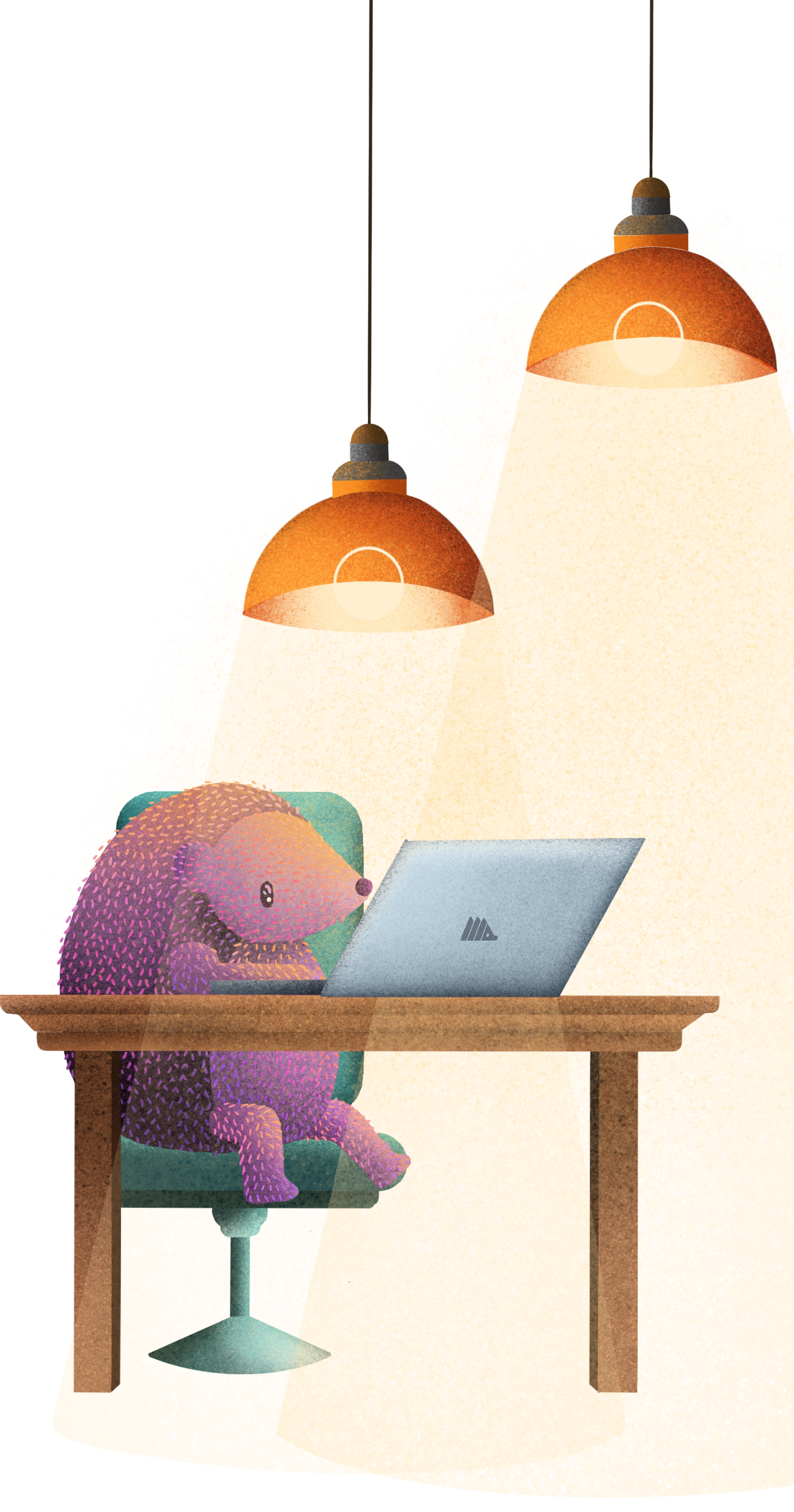
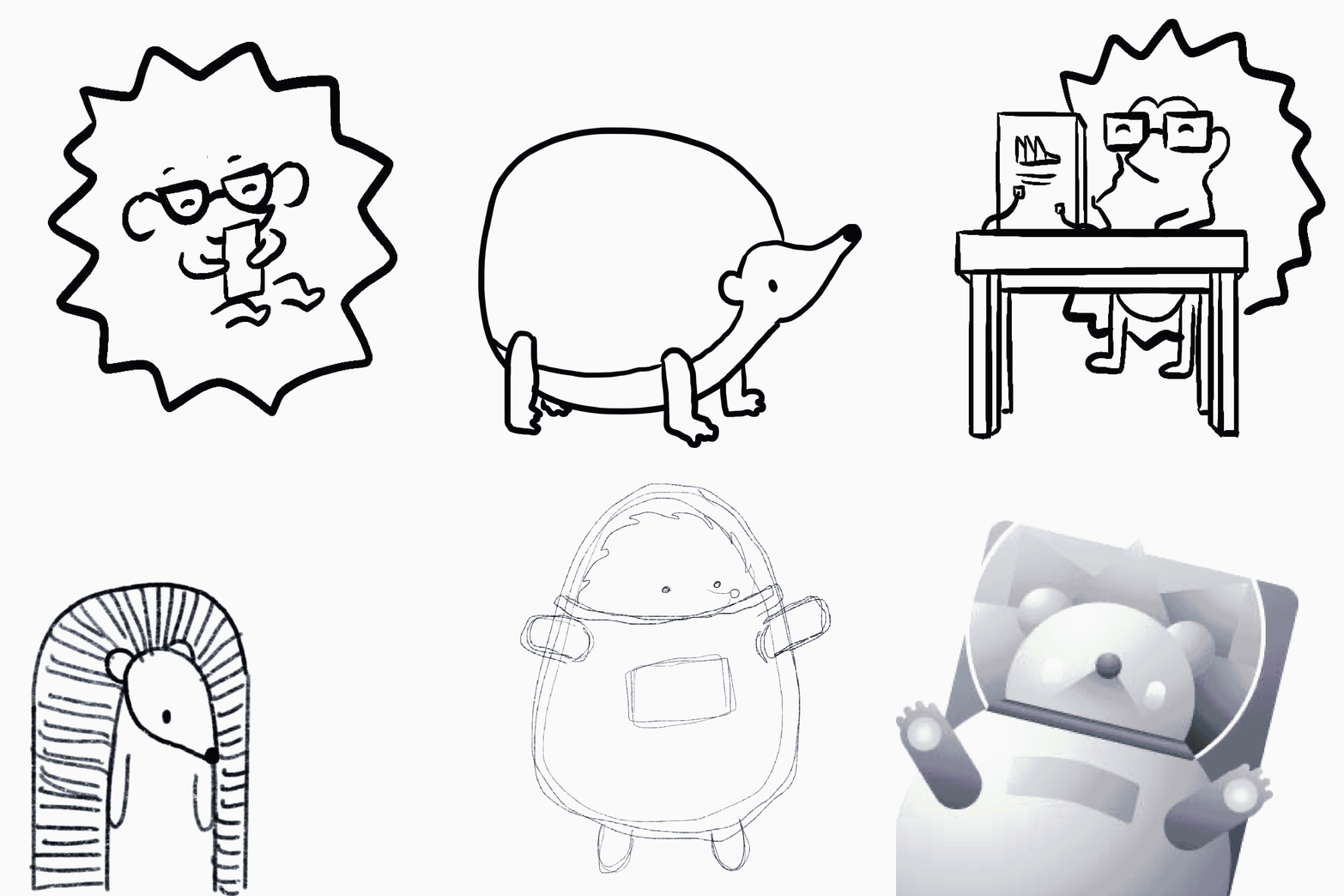
She looked to Sentry and Hasura, two technical companies that pair complex products with colorful, approachable mascots, and went through roughly 18 variations of Max. Large, small, angry, 3D, square. She even tried building him in Blender, but the result felt “cold and robotic.” The breakthrough came when she leaned into warmth. A frumpy, round-bodied character, a bit like Gudetama (minus the exposed backside), sitting at a desk tapping away at keys, just like the engineers using the product.
That relatability became Max’s superpower.
What makes Max work: a design agency’s take
We tend to evaluate mascot systems through four lenses: Identity, Flexibility, Ecosystem, and Commerce. Here’s how Max holds up.
1. Identity: instantly recognizable, deceptively simple
Max’s design rules are tight. Beige body. Brown spines. Monoline outline. Eyebrow-driven expression. No fingers, unless he’s pointing or swearing (yes, that rule is written down). Stubby feet. Those constraints create consistency across hundreds of illustrations and make Max immediately identifiable at any scale, from a favicon to a billboard.
And speaking of billboards. PostHog ran billboard ads across San Francisco in January 2025 featuring Max, and the character held up beautifully. That’s the mark of a well-built mascot: it works at 16 pixels and 16 feet.
2. Flexibility: a character that can do anything
This is where PostHog quietly separates itself from the pack. Max isn’t a static logo mark. He’s a character system. He takes on professions, hobbies, costumes, contexts. There’s a police hog who stops users from making form errors. There’s Max at a desk, Max in a spacesuit, Max doing pretty much whatever the product or content needs him to.
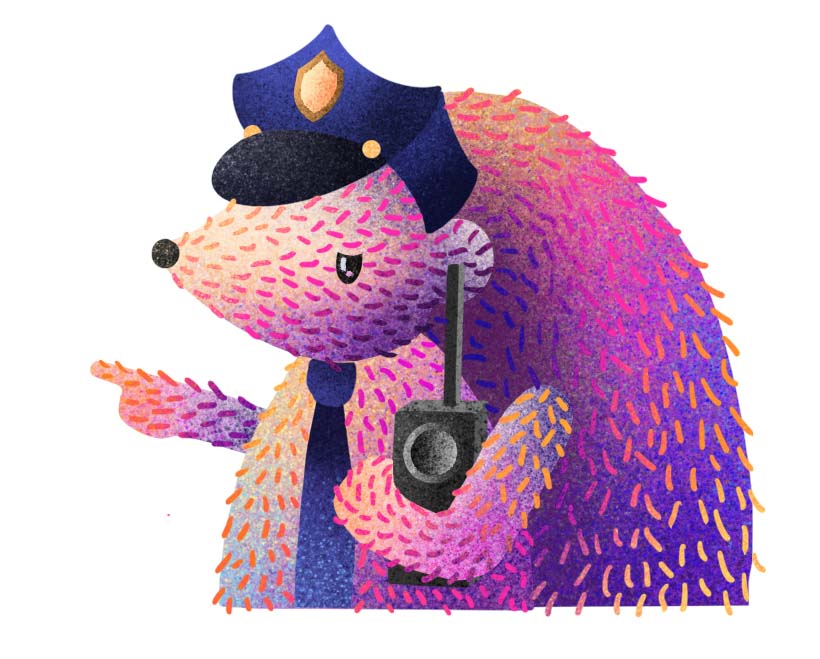
As Lottie described in her blog post on designing the mascot, the character “grew and grew, taking up new hobbies and professions.” Each variation reinforces brand identity while keeping the visual language fresh. Most B2B companies never pull this off. Their mascot stays frozen in one pose forever.
3. Ecosystem: more than one hog
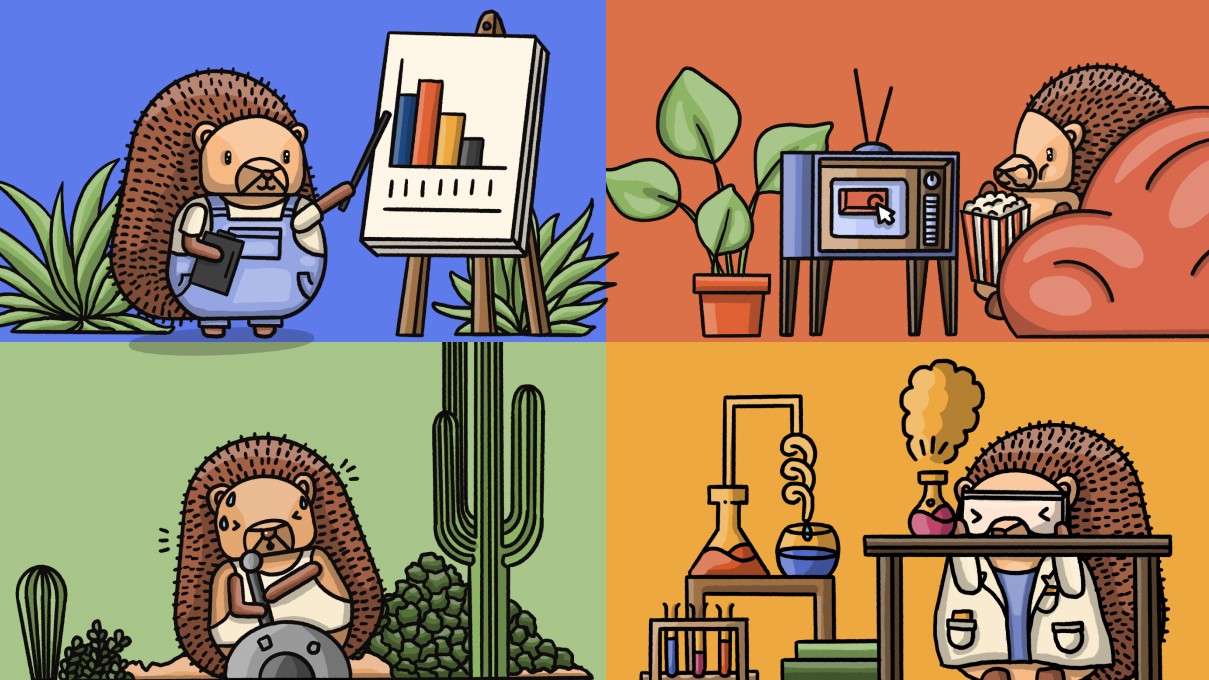
Max has “hoggy pals.” PostHog hasn’t just built a mascot. They’ve built a cast. This is a major strategic advantage that a lot of brands overlook. A single character can carry a brand, but a whole world of characters can carry an entire content ecosystem.
They even built Hogotchi, a Tamagotchi-style virtual pet app starring Max, originally used as a demo for testing push notifications. That’s a mascot pulling double duty as a product demo. Just brilliant.
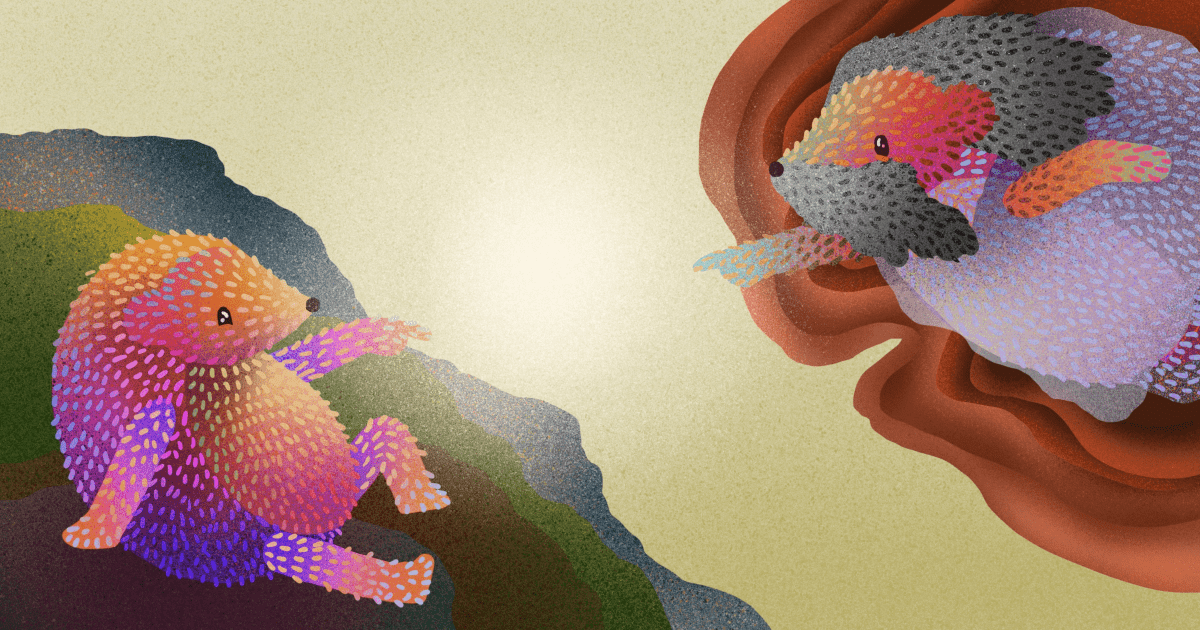
4. Commerce: merch people actually want
PostHog’s merch store isn’t an afterthought. They ship hedgehog-branded apparel and accessories through a fulfillment partner, timed to seasonal fashion cycles. Their own internal handbook says: “We won’t stop until our merch store reaches product-market fit.” And perhaps the most telling stat? They claim they’ve never had a single return.
When your mascot makes people want to wear your brand, you’ve crossed the line from marketing asset to cultural artifact.
The PostHog playbook: what other brands can learn
PostHog’s approach to Max offers a handful of lessons that are easy to admire and hard to execute.
Commit to the weird. James Hawkins put it bluntly: “Everyone else has blue websites that are super boring. So we’re going to name ourselves after a hedgehog. We’re going to have a weird, unusual style because we are the weird and unusual ones.” Most companies sand down their edges. PostHog sharpened theirs.
Give your designer real power. Lottie isn’t decorating someone else’s decisions. She has real creative autonomy. She once pitched a Sesame Street-style puppet hedgehog for YouTube tutorials over drinks at a cricket match, and the company actually funded it. That level of trust produces better work than any brief ever could.
Protect your character. PostHog is explicit in their brand guidelines: no AI-generated hedgehog art. They maintain detailed rules about how Max should and shouldn’t be drawn. This kind of guardrail might feel rigid, but it’s exactly what keeps a mascot from drifting into incoherence over time.
Let the mascot be a content engine. Max isn’t just hanging out on the homepage. He’s in error states, blog headers, product pages, merch, billboards, a virtual pet app, and (allegedly soon) puppet form. Every touchpoint is a chance for the character to do work.
Where Max could go next
We do this for a living, so we can’t help ourselves. Here’s where we think Max could go even further.
Animated Max
Max’s expressions live in his eyebrows, which is a perfect foundation for animation. Short-form animated loops, things like micro-interactions in the product, loading states, social media clips, would bring him to life without requiring a full animation pipeline. Even a subtle eyebrow raise or a blink cycle would add a layer of warmth that static illustration just can’t match.
Voice and audio identity
If Max is going to show up as a puppet (which Lottie has hinted at for YouTube tutorials), he’s going to need a voice. This is a huge opportunity to deepen the character. It doesn’t need to be a celebrity. It just needs to feel like Max. Slightly nerdy, warm, deadpan humor. Something that fits PostHog’s self-aware irreverence.
Interactive Max (beyond Hogotchi)
Hogotchi was a great proof of concept. We’d push it further: Max as an onboarding companion within the product itself. Picture Max walking a new user through setting up their first feature flag, not as a generic chatbot, but as a character with personality, reactions, and opinions. Think Clippy, but actually good.
3D Max (done right)
Lottie tried 3D early on and it came out cold. But 3D rendering has come a long way since then, and a stylized 3D Max, one that preserves the monoline warmth and eyebrow expressiveness, could open up entirely new formats. AR filters, event installations, animated explainer videos, even a collectible figurine line. The trick is keeping Max’s soul intact while expanding his dimensions.
Expanded hog universe
The “hoggy pals” are underutilized. Each PostHog product feature could have its own hog character with a distinct personality. Feature Flags Hog. Session Replay Hog. Experiments Hog. This creates internal brand language, makes the product suite more navigable, and gives the merch store an infinitely expandable roster.
Max as cultural commentary
PostHog’s brand voice is unfiltered and irreverent. Max could lean into cultural moments, not in a cringe, corporate way, but the way Duolingo’s Duo became a chaotic social media presence. Max already has the personality bones for it. He just needs permission to be a little unhinged.
Why we wrote this
We don’t write blog posts about mascots we think are just okay. Max is one of the best mascot systems in B2B tech. Thoughtfully designed, rigorously maintained, woven into every layer of the product and brand, and backed by a company that actually values creative autonomy.
We wrote this because we admire the work. And because we think Max’s best chapters are still ahead.
So Lottie, if you ever read this: you’ve built something special. Max has more in him, and if you ever want a team to help support your vision for where he goes next, hit us up. We’d love nothing more than to help Max reach his full potential.