
3 min read
Why do companies use mascots
The short answer is that mascots work. The longer answer is more interesting.
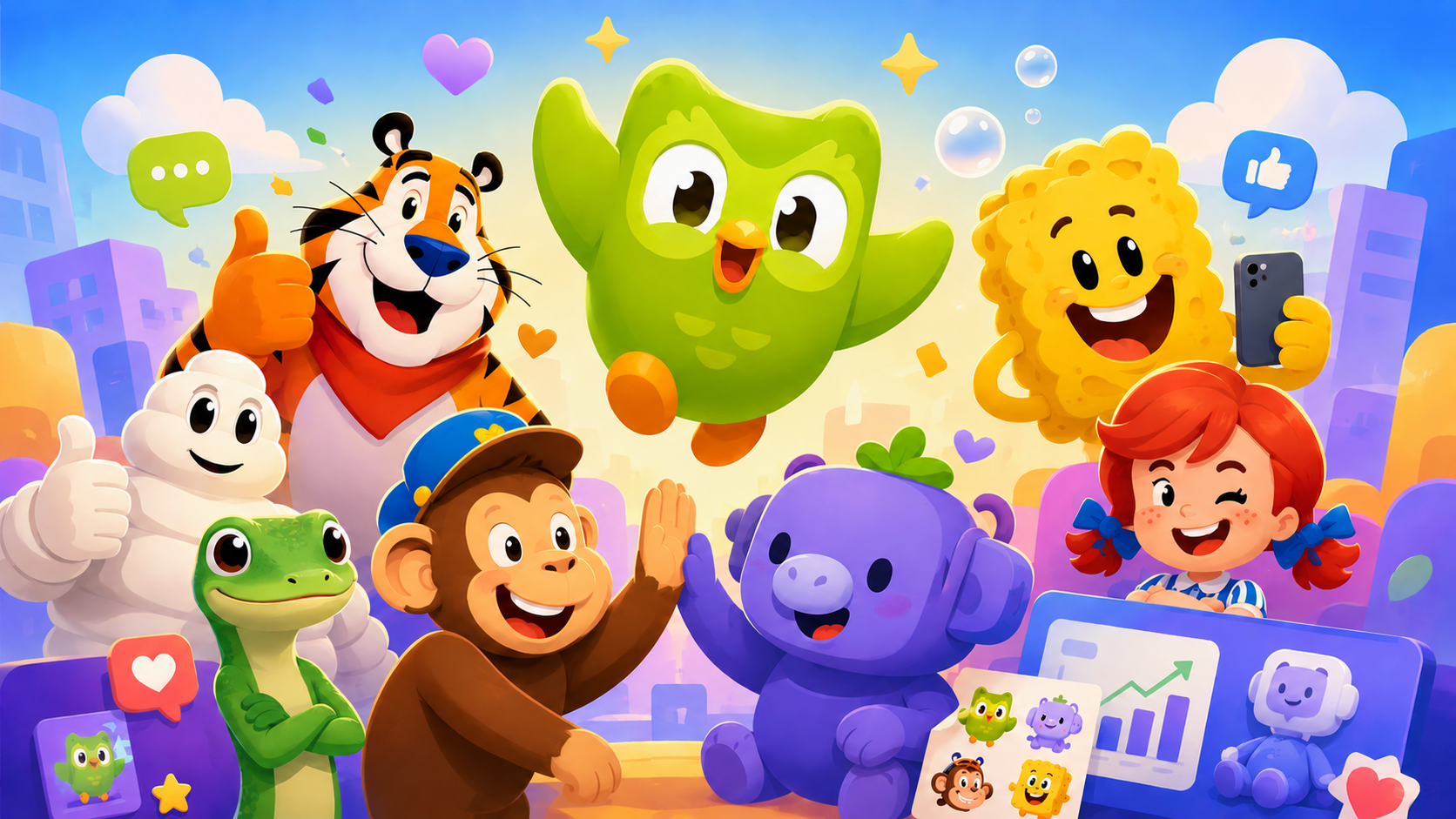
Companies have been using brand characters for over a century, from the Michelin Man in 1898 to Duolingo’s owl terrorizing people on TikTok today. The formats change, the platforms change, but the underlying reasons stay the same.
People process faces differently than shapes
This is the neuroscience argument, and it’s the strongest one. Human brains have dedicated neural pathways for processing faces. When you see a character with eyes and expressions, your brain activates social processing regions that a geometric logo cannot trigger.
That’s why you remember the Geico Gecko but can’t picture the Allstate logo. It’s why kids recognize Mojo from ClassDojo before they can read the company name. Faces create a fundamentally different kind of attention and memory.
Characters create emotional connection
A logo can communicate professionalism or modernity, but it can’t make you feel something. A character can. When Mailchimp’s Freddie gives you a high-five after sending a campaign, you feel a moment of satisfaction. When Discord’s Wumpus shows up on an error page looking confused, you feel a moment of warmth instead of frustration.
These micro-moments add up. Over hundreds of interactions, they build genuine affection for the product. That affection translates into loyalty, word-of-mouth, and the kind of brand relationship that’s extremely difficult to buy with advertising.
Mascots outperform other creative in advertising
The data here is consistent. Campaigns featuring brand characters see higher recall, higher engagement, and stronger purchase intent than campaigns without them. Research from the IPA (Institute of Practitioners in Advertising) found that campaigns with characters are more likely to drive large profit gains.
This makes intuitive sense. A character gives advertising a recurring protagonist. Instead of starting from zero with every campaign, you’re continuing a story that people already recognize. That continuity compounds over time.
They give brands a voice
A company can’t have opinions. A character can. Duolingo’s owl can be passive-aggressive about your missed lessons. Wendy’s Twitter account can roast competitors. The Scrub Daddy sponge can have a personality on TikTok.
Characters give brands permission to be specific, opinionated, and entertaining in ways that a corporate voice never could. The brand stays professional. The character gets to be interesting.
They work across every medium
A mascot can appear on a product screen, a billboard, a plush toy, a social media post, a conference booth, a sticker sheet, and a Halloween costume. No other brand asset has that range.
That versatility is a huge practical advantage. Every new touchpoint is an opportunity for the character to show up, and every appearance reinforces the brand. Over years, the cost per impression approaches zero because the character keeps working without needing to be redesigned.
They create community
When people connect with a character, they start creating around it. Fan art, memes, costumes, customizations. Discord users make Wumpus fan art. Duolingo fans create Duo content. Reddit communities customize Snoo for their subreddits.
This user-generated content is enormously valuable. It’s organic, it’s authentic, and it extends the brand’s reach far beyond what the company could do alone. A good mascot doesn’t just represent a brand. It invites people to participate in it.
They build compounding value
Most marketing assets depreciate. An ad campaign runs for six weeks and then it’s over. A mascot gets more valuable every year. The longer a character is in consistent use, the deeper the recognition, the stronger the affection, and the more cultural equity it accumulates.
The Michelin Man has been building brand equity for over 125 years. Tony the Tiger has been building it for over 70. Even relatively new characters like Duo and Wumpus have accumulated significant cultural capital in just a few years of consistent use.
That compounding effect is the real reason companies invest in mascots. Not because they’re cute. Because they’re one of the few brand assets that actually gets better with time.