7 min read
Why software companies draw animals
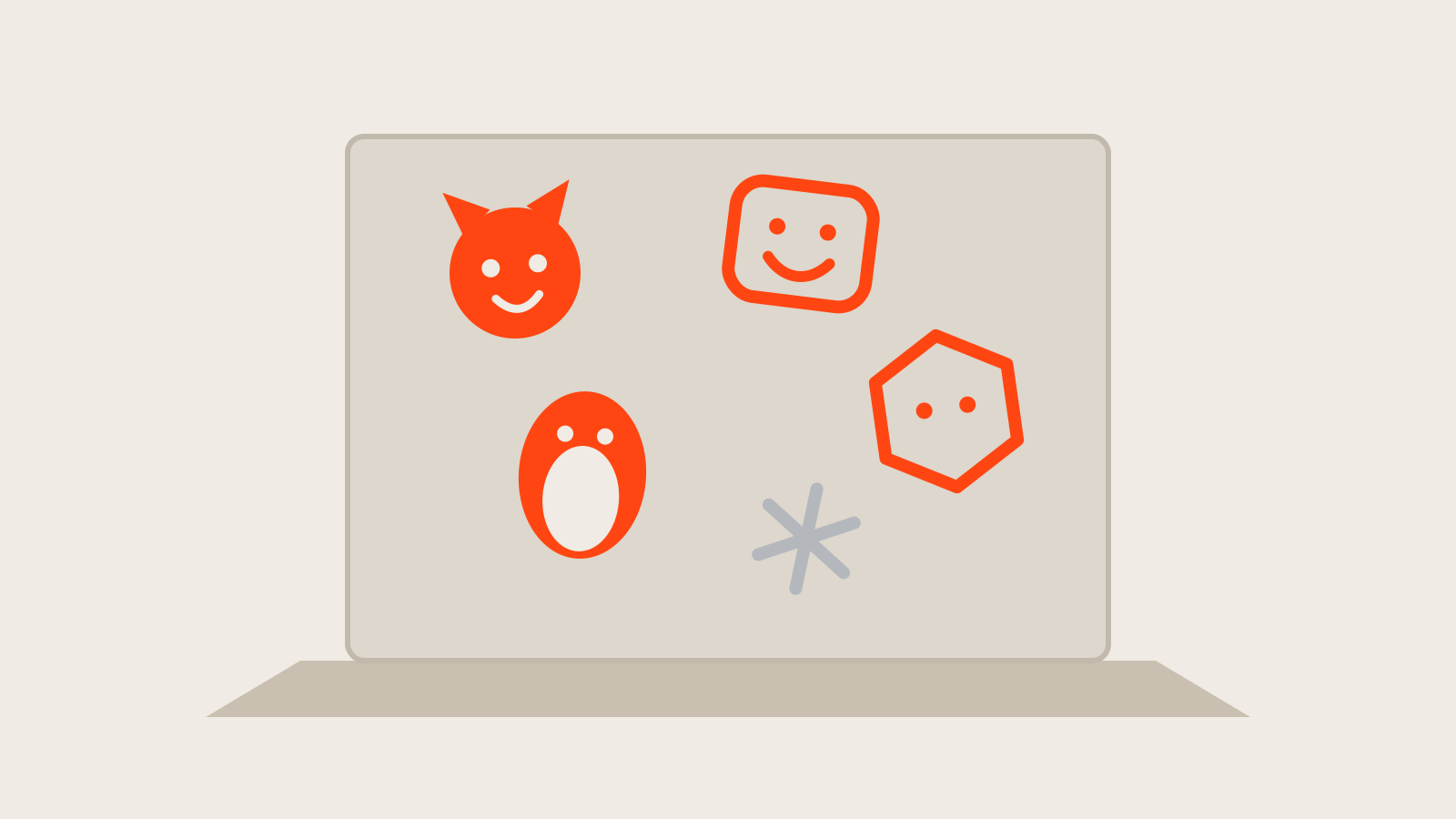
The Octocat was inventory. Simon Oxley, a British illustrator living in Japan, drew an octopus with a cat’s face and uploaded it to iStockphoto, where GitHub’s founders found it in 2008 while looking for something funny to put on a 404 page. They went back to Oxley and bought exclusive rights. He had called it Octopuss. Somebody at GitHub kept saying Octocat instead, and that was that. The same illustrator had sold Twitter its bird two years earlier, which means two of the most recognised marks in software history were sitting in a stock library at list price.
The cheapness of that origin is the fun part of the story. The part worth thinking about is why a version control company for professional programmers needed a cartoon animal at all.
The highest mascot density in the world is in developer tools
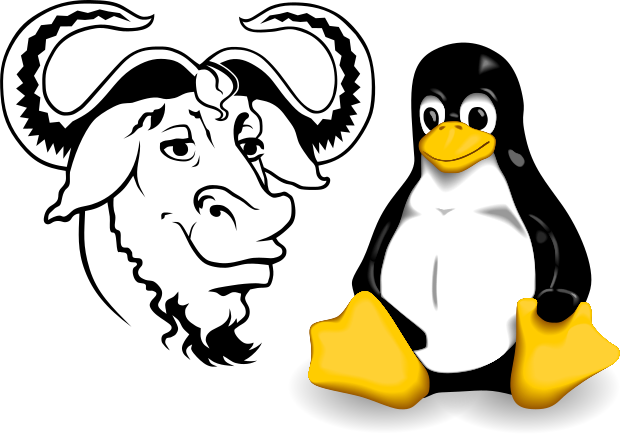

Linux has a penguin, drawn by Larry Ewing in 1996 in GIMP because Linus Torvalds wanted a penguin. Go has a gopher by Renée French. PHP has an elephant that Vincent Pontier drew in 1998. Postgres has an elephant of its own, MySQL has a dolphin, BSD has a devil, GitLab has a tanuki, Docker has a whale carrying shipping containers, and Rust has a crab named Ferris who was made by the community rather than the project and then adopted anyway.
Now consider who this menagerie is aimed at. Developers block ads at the DNS level. They mute brand accounts. They can identify a landing page written by a marketing team inside four words and they will tell you about it. This is the most advertising-resistant audience that has ever existed.
And they will put a penguin sticker on a three thousand dollar laptop, unpaid, and then defend the penguin.
A logo gets recognised. A character gets adopted.

The mechanism worth naming here is not general warmth. It is specific to how software gets chosen.
Nobody buys Postgres. There is no purchase, so there is no advertising to resist and no salesperson to distrust. What there is instead is a person who has to pick one thing over another and then go into a meeting and argue for it, put it in a bio, wear it to a conference, teach it to a junior. Adoption in software runs on identity, because the thing being adopted is free and the only cost is the reputation of the person recommending it.
A logo cannot help with any of that. A logo is a recognition device, built to be identical every time and legible at a glance, and those two constraints are most of what a logo is. What a logo cannot be is liked. You can admire a wordmark. You have never felt anything about one the way you have felt something about an animal with an expression on its face.
A character can be liked, and more usefully it can be carried. It goes on a sticker, an avatar, a conference badge, a plushie on someone’s monitor. Every one of those is a person publicly attaching their own credibility to a piece of software. Open source projects with no marketing budget out-mascot funded companies constantly, and this is why. The community does the deployment for free, but only if there is something worth carrying.
Then the same trick gets used where there is something to explain


Move out of open source and into the platforms and the pattern changes character.
Reddit has Snoo, a small figure with dot eyes and an antenna and no colour of its own, sitting on top of one of the least governable communities on the internet. Duolingo has an owl whose entire public personality is that he will find you. Mailchimp has a chimpanzee in a hat attached to a product whose actual function is sending bulk email to people. Discord has Wumpus. Slack, Notion, Figma, Linear and the rest have spent a decade making software feel like a friendly object you keep in your pocket.
Software asks for a lot. Your code, your calendar, your documents, your company’s private conversations, your kid’s homework. There is no natural warmth in that transaction, and the character is where the warmth comes from. You like the owl and you come away marginally warmer toward the company holding your data, and you never agreed to that transfer. It happened somewhere below the level where you decide things.
The suspicion people have about mascots is a correct read on this mechanism rather than a paranoid one. A company reaching for a character is telling you it knows it has a warmth problem. Whether that is a confession or a promise depends entirely on what happens next.
Clippy scored higher on trustworthiness than 249 other faces
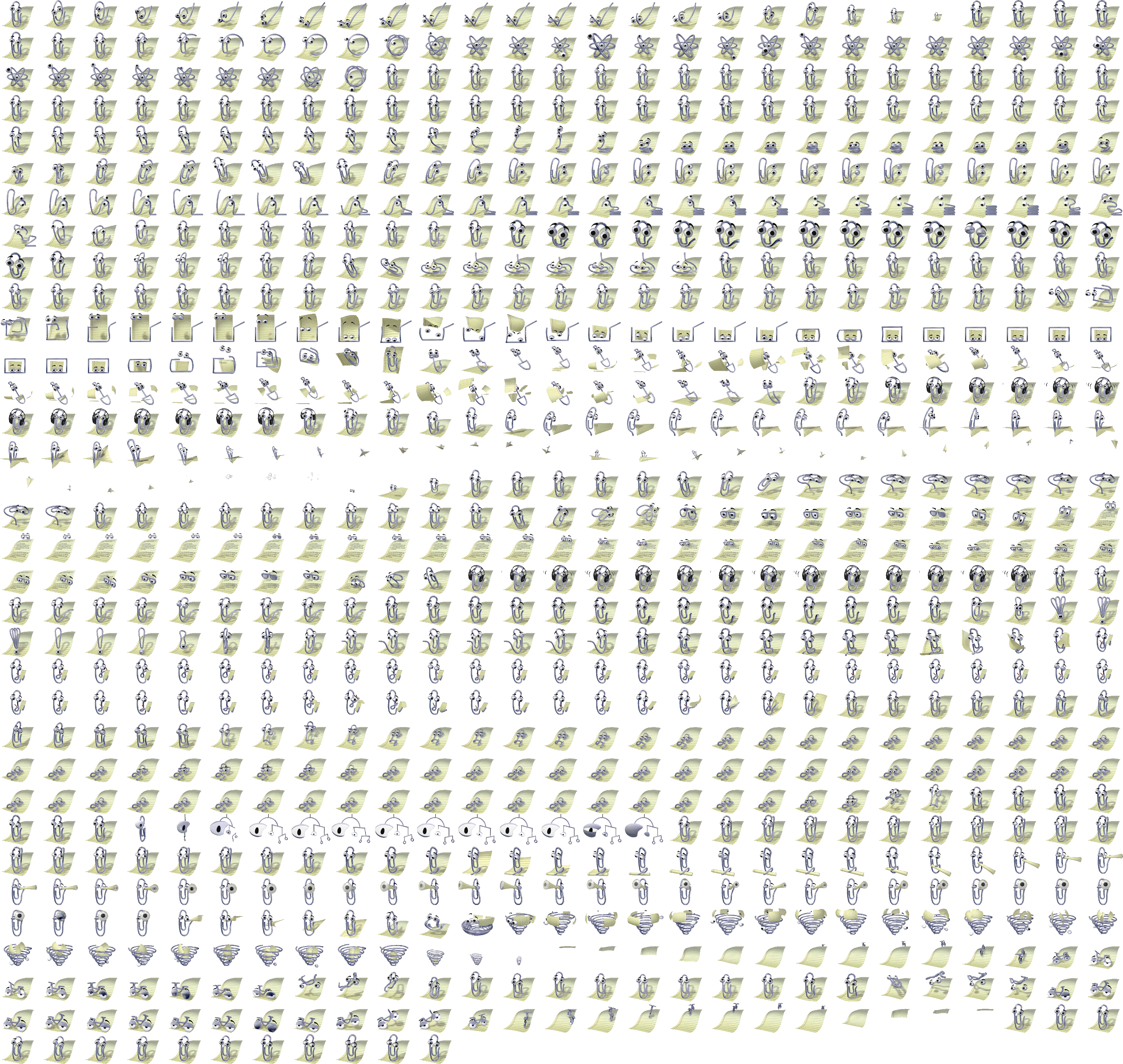
Which brings us to the most misunderstood character in software history.
Kevan Atteberry drew the paperclip on a pencil sketch at his studio in Bellevue after Microsoft moved his contract off the failed Microsoft Bob project and onto the Office Assistant. His paperclip went into a pool of around 250 candidate faces. They were run through focus groups and then evaluated with help from Stanford psychologists on how trustworthy and friendly each one read. Clippit won on every metric. He shipped in Office 97 as the default and became the most resented piece of character design in the history of the industry.
Nothing was wrong with the drawing. The eyebrows are excellent. The problem was that he was attached to a feature that interrupted you, guessed wrong about what you were doing, and could not be got rid of easily. A mascot inherits the behaviour of the thing it is attached to, and no amount of testing on the character can save it from what the product does.
The proof is what happened next. Microsoft brought Clippy back decades later as a sticker and an emoji, and people were pleased to see him. The character had not changed at all. He had stopped interrupting anybody, and the affection that was always available to that drawing became collectable.
The tell is who refuses to draw a face

Here is the strangest thing about the current moment in software.
The largest new category in tech has almost no mascots. AI companies picked orbs, sparkles, gradient blobs and asterisks. An industry with a serious trust gap, selling a product people find slightly uncanny, has declined the single most reliable warmth device available to it. Duolingo’s owl is right there as a working demonstration that the tool still functions.
The refusal makes sense once you see what a face costs. A character reads as an entity with intent, and entities with intent can be held responsible. Give your model a name and a face and people will start asking that face what it did with their data, why it made something up, who it works for. A sparkle cannot be asked any of that. Abstraction is the safer choice for a company that would rather not be personified while it works out what it is.
That is a defensible decision and it is also a temporary one. The characters that last are the ones that turn out to be accurate about the thing behind them. Tux is honest about Linux. The Duolingo owl is honest about an app that will absolutely nag you. Clippy was honest too, which was the whole problem.
Draw the animal when you are ready for people to talk to it.
We design characters for software companies, including the ones with something to explain. Tell us what yours is.