6 min read
Why tech draws animals instead of people
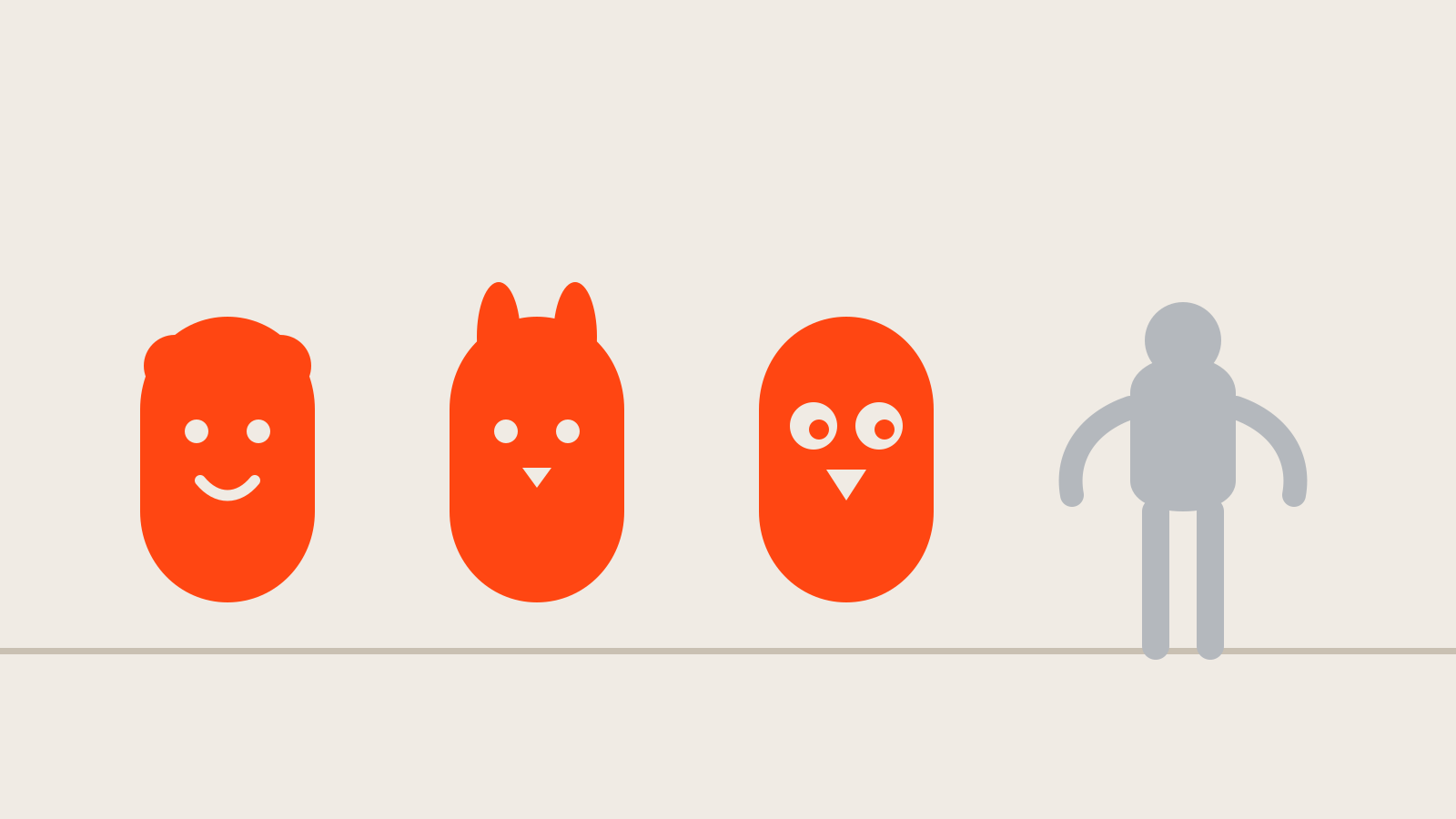
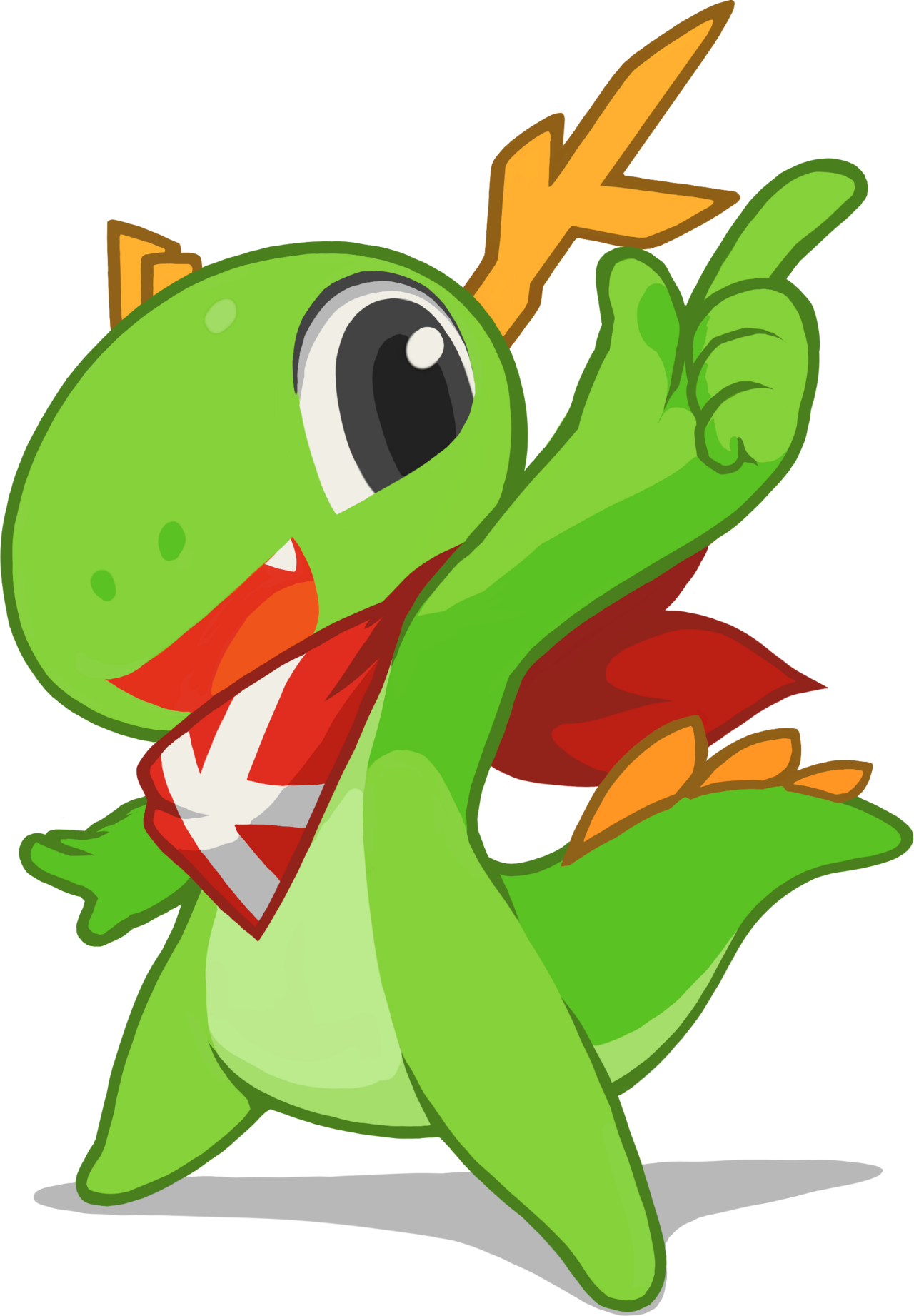
Take the roll call. Linux has a penguin, Go has a gopher, Rust has a crab, PHP and Postgres have elephants, MySQL has a dolphin, Docker has a whale, GitLab has a tanuki, Mozilla has a red panda, Mailchimp has a chimpanzee, Duolingo has an owl, GitHub has whatever an Octocat is. Reddit’s Snoo is an alien, which is the industry’s way of drawing a person without drawing a person.
Software is built by people, for people, about the things people do all day. Its mascots are a zoo.
The easy explanation is that animals are cuter, and that explanation is wrong. Plenty of beloved characters across advertising history are human. The real reason is structural, and once you see it you cannot unsee it in any brand meeting.
A person is a stack of decisions you cannot avoid

Draw a human character and you have to answer, in the first ten minutes, a set of questions that have no neutral answer.
How old are they. What colour is their skin. What is their hair doing. What body do they have. What are they wearing, and what decade do those clothes belong to. Are they read as a man or a woman or neither, and was that a choice or an accident. Each answer is a statement about who this product is for, delivered before anyone reads a word of copy, and delivered to everyone including the people who are not that.
Draw a gopher and you answer none of them. A gopher has no age, no ethnicity, no accent, no wardrobe and no decade. It carries personality without carrying demography. It cannot be aspirational and it cannot be exclusionary, because there is nobody it is trying to be.
So the industry that spends more time than any other talking about who gets included quietly settled on woodland creatures. That is not hypocrisy so much as risk management working exactly as designed. A crab excludes nobody. A crab also never has to be approved by six stakeholders who each have a different idea of what the customer looks like, and anyone who has sat in that meeting understands the appeal of a crab.
The style tech invented for drawing people is the same instinct, less honest
The dodge is easier to see in the place tech could not avoid human figures: marketing illustration.
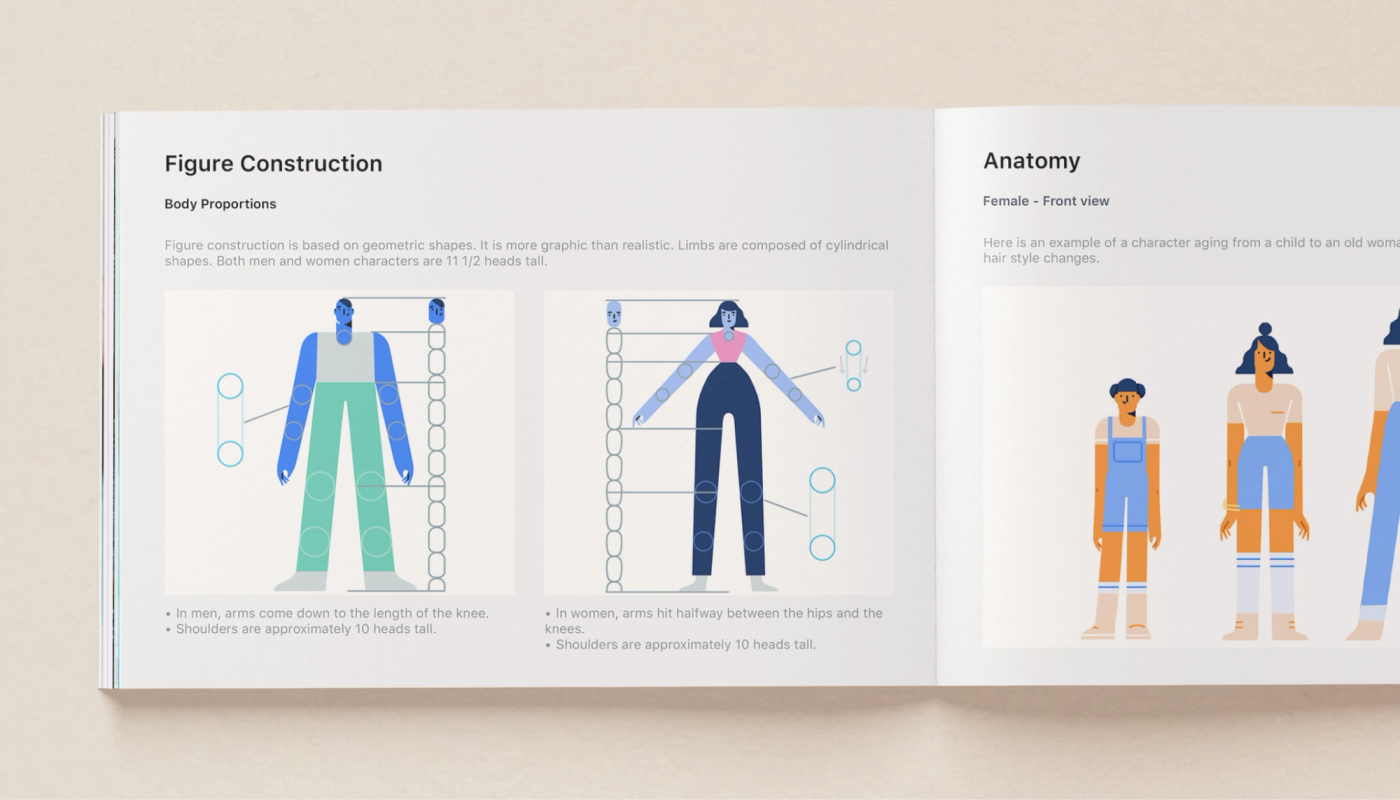
In 2017 the studio Buck built an illustration system for Facebook called Alegria. Flat shapes, small heads, long bendy limbs, minimal facial detail, and skin rendered in blue and purple and green. Within a few years the entire industry was working in it, to the point that it acquired a nickname, corporate Memphis, and a backlash. The most common criticism is the fair one: rendering people in non-representational colours reduces diversity to a palette decision and quietly removes the cultural markers that would have made anyone specific.
Look at what that style is doing and it is the animal move performed on a human body. Universal, unplaceable, nobody in particular, no decade, no demographic. It spread because it solved a real problem for a real constraint, and it also has to keep claiming these are people, which is why it draws more complaints than the gopher ever will. The penguin is at least honest about being a penguin.
Duolingo pays for both, and that is the tell
The clarifying case is the company that did not choose.
Duo the owl does what an animal mascot does. He is the brand, he is the joke, he is the thing on the app icon and in the memes, and he works because he is a personality rather than a person.
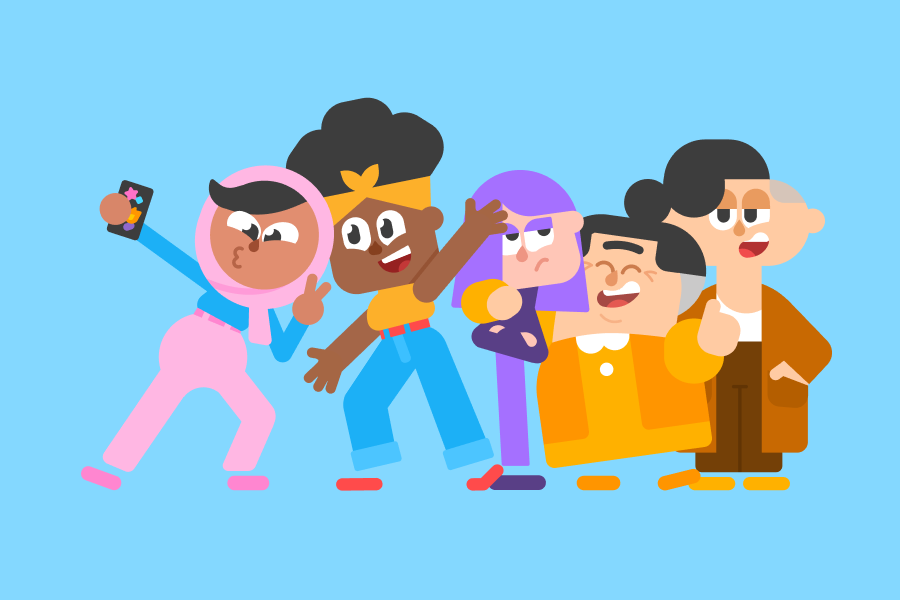
Alongside him, Duolingo runs a cast of humans, each of whom is emphatically somebody. Lily is a goth with dyed hair and a permanent expression of disdain. Zari wears a hijab. Lucy is a middle-aged Asian woman. Bea, Oscar, Eddy, Lin, Junior and Vikram each look like a specific person from a specific place rather than a blue silhouette. They have been redesigned over the years and the redesigns pushed toward more specificity, not less.
That cast exists because the owl cannot do their job. A language app has to show learners in the world, having conversations, being embarrassed, ordering the wrong thing in a restaurant. That content requires people, and people who are nobody in particular are useless for it. So Duolingo carries the cost: a bigger cast, harder decisions, more ways to get it wrong, and characters that people argue about on the internet.
The trade, stated plainly
.jpeg)
An animal buys you universality and charges you specificity. Nobody is excluded, and nobody is depicted either.
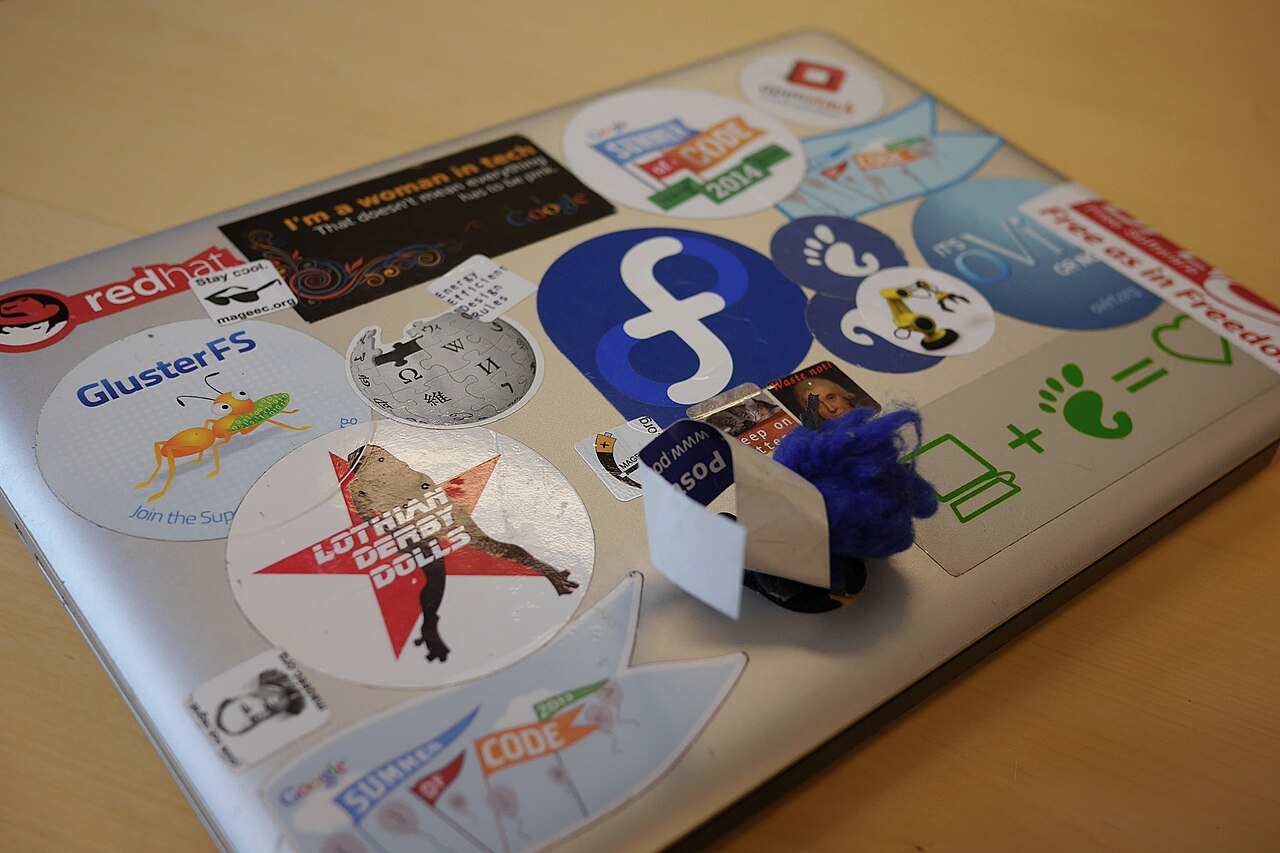
For a developer tool that is the right trade every time. Postgres does not need to show you a person, it needs a face that a hundred thousand engineers can put on a laptop without any of them feeling like the sticker is about somebody else. The elephant is not a compromise there. It is the correct answer.
For a product whose subject is people, the trade goes the other way, and the tell is a question worth asking early. Does this character need to be someone, or does it only need to be something? A character that needs to be someone cannot be an owl, and the moment you accept that you have signed up for the harder version of the project.
There is also an unglamorous commercial reason that nobody puts in the deck. An animal does not age. It has no clothes to go out of style, no haircut that will date it to a particular decade, and no risk of resembling a person who later turns out to be a problem. Tux looks thirty years old because he is thirty years old, and he does not look like 1996 in the way a drawn human from 1996 unmistakably does. Characters are long-term assets and animals depreciate more slowly. That is a boring reason and it is doing more work in this industry than anyone admits.
The zoo is not a failure of nerve. It is an accurate reading of what most software characters are being asked to do. Just be clear which job you are hiring for, because the moment your character has to be somebody, no amount of good drawing will make an owl into a person.
We design both kinds, and the first conversation is usually about which one you need. Tell us what yours has to be.